What is Laser Skin Resurfacing? Benefits, Procedure & Recovery in 2026
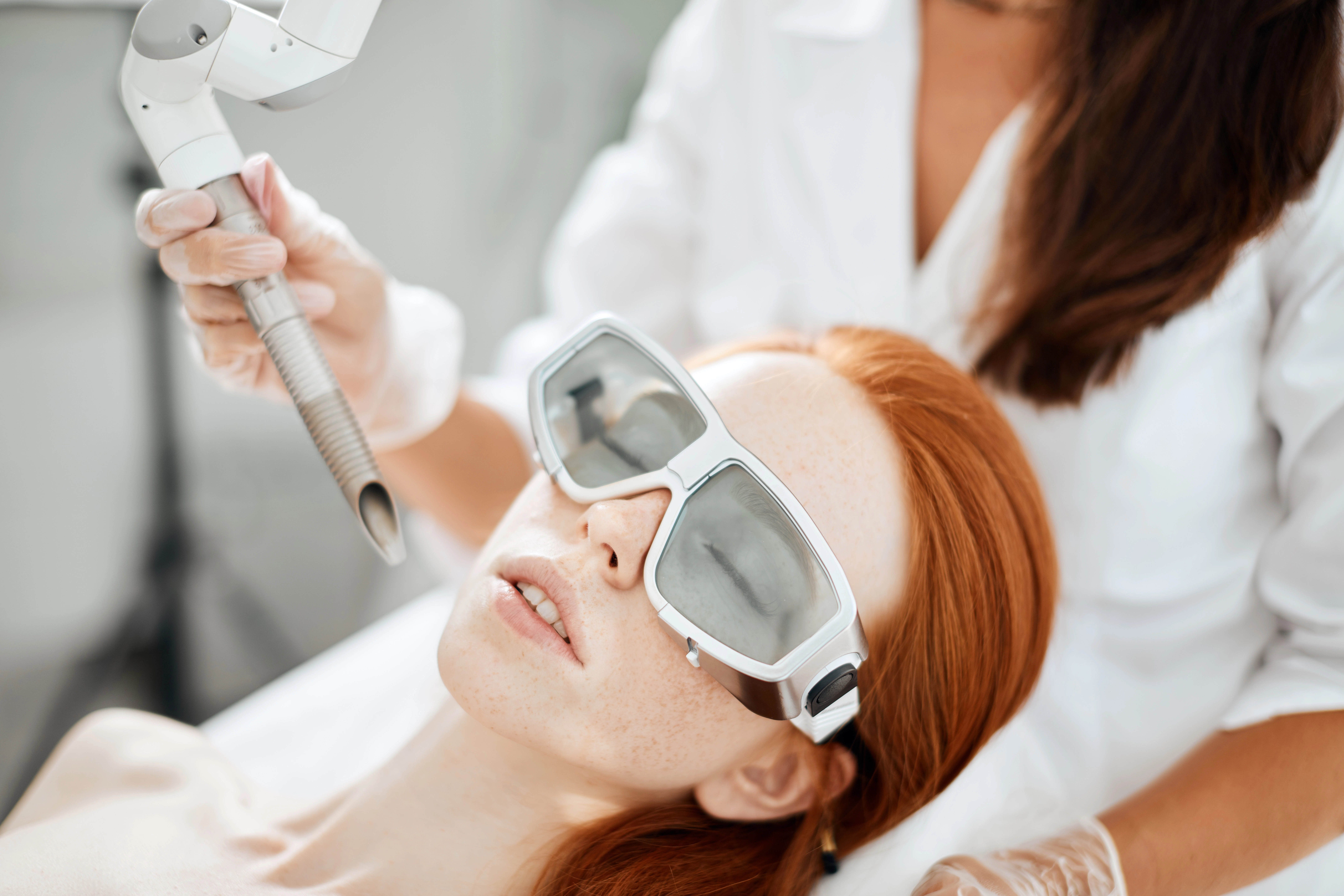
Laser skin resurfacing is a physician-performed treatment that uses focused light energy to remove damaged skin cells and stimulate collagen production, improving the appearance of wrinkles, acne scars, sun damage, and uneven texture. Unlike topical skincare, it creates measurable structural changes at the tissue level.
This guide covers how laser resurfacing works, the different technologies available, what the procedure and recovery involve, realistic results timelines, cost factors, and how it compares to other treatments.
What is Laser Skin Resurfacing?
Laser skin resurfacing directs concentrated light energy at the skin to remove damaged cells and trigger the body's healing response. As new cells replace old ones and collagen remodels in the deeper dermis, skin becomes smoother, firmer, and more evenly toned. Results develop over weeks to months, not immediately.
There are two fundamental approaches. Ablative lasers remove the outer layer of skin, producing more significant results with longer downtime. Non-ablative lasers heat the dermis without disrupting the surface, stimulating collagen with less recovery time but more gradual improvement. Most modern treatments use fractional delivery, which targets microscopic columns of tissue while leaving surrounding skin intact to accelerate healing.
Laser Skin Resurfacing Trends & Popularity
Laser resurfacing consistently ranks among the most commonly performed non-surgical cosmetic procedures in the United States. Growth has been driven largely by advances in fractional technology, which made it possible to achieve results previously associated with full ablative treatments while cutting recovery time significantly. Patients are increasingly choosing physician-performed in-office procedures with defined protocols over more invasive surgical alternatives.
Why Consider Laser Skin Resurfacing?
Common reasons patients seek laser resurfacing include:
Wrinkles and fine lines that haven't responded well to injectables or topical treatments
Acne scars, including rolling, boxcar, and ice pick scarring
Sun damage, age spots, and diffuse hyperpigmentation
Rough or dull skin texture that skincare alone can't address
Mild to moderate skin laxity where collagen stimulation can provide tightening
The right laser type and protocol depend on the specific concern, skin type, and how much downtime the patient can accommodate.
Types of Laser Skin Resurfacing Treatments
Laser resurfacing is categorized by how the laser interacts with the skin (ablative vs. non-ablative) and how the energy is delivered (full-field vs. fractional). Technologies like CO2 and Erbium fall within these broader categories.
Ablative Laser Resurfacing
Ablative lasers remove the outermost skin layers, triggering substantial collagen remodeling. Best for deep wrinkles, moderate to severe acne scarring, and pronounced texture concerns. Downtime typically runs 7 to 14 days. CO2 and Erbium:YAG are the primary ablative technologies.
Non-Ablative Laser Resurfacing
Non-ablative lasers heat the dermis without removing the skin surface, producing collagen stimulation with less downtime. Better suited for mild to moderate concerns. Results are more gradual and typically require multiple sessions. Common technologies include Nd:YAG and diode lasers.
Fractional Laser Resurfacing
Fractional delivery is a method, not a laser type. Instead of treating the entire surface uniformly, fractional devices target thousands of microscopic treatment zones while leaving surrounding tissue intact. This accelerates healing and is available in both ablative (fractional CO2) and non-ablative formats. It represents the current standard for most resurfacing indications.
CO2 vs. Erbium Lasers
Both are ablative technologies but differ in depth and thermal effect. CO2 lasers penetrate more deeply, making them preferable for severe wrinkles and significant scarring, with recovery typically running 10 to 14 days. The Tetra Pro CO2 laser with CoolPeel technology allows for controlled superficial ablation using CO2 energy with substantially reduced downtime compared to traditional CO2 protocols. Erbium:YAG lasers are more precise, produce less thermal damage, and are better suited for lighter resurfacing with a faster recovery of 5 to 7 days. They are also generally considered safer for medium skin tones.
Key Benefits of Laser Skin Resurfacing
Smoother Skin Texture
Ablative treatments physically remove rough, damaged surface cells, eliminating visible texture irregularities from scarring or chronic sun exposure. Non-ablative treatments achieve a more gradual version through sustained collagen stimulation over multiple sessions.
Reduction of Wrinkles and Fine Lines
Both approaches stimulate collagen and elastin production, softening lines and wrinkles over weeks and months as new collagen matures. Results are most noticeable around the eyes and mouth where early aging signs concentrate.
Pigmentation Correction
Ablative treatments remove pigmented surface cells. Certain non-ablative lasers selectively target melanin deposits in the dermis. Results vary by pigmentation type; melasma in particular requires careful, physician-managed protocols to avoid post-inflammatory hyperpigmentation.
Skin Tightening
Collagen stimulation from laser resurfacing produces gradual firming over three to six months post-treatment. Not a substitute for a surgical lift, but a meaningful improvement in dermal integrity for patients with early laxity.
Long-Lasting Results
Ablative treatments can produce results lasting 3 to 5 years with proper sun protection and skincare maintenance. Non-ablative results are more incremental and may require maintenance sessions annually or biannually.
Downsides and Risks of Laser Skin Resurfacing
Downtime
Full ablative CO2 treatments require 10 to 14 days of active healing. Fractional CO2 (CoolPeel) typically involves 2 to 5 days of redness and mild swelling. Non-ablative treatments may involve 24 to 48 hours of redness. Patients should plan schedules around the expected recovery window for their specific treatment.
Hyperpigmentation and Scarring Risk
Post-inflammatory hyperpigmentation is a known risk, particularly for medium to darker skin tones (Fitzpatrick types III–VI). Pre-treatment priming with retinoids or hydroquinone significantly reduces this risk. Scarring is rare with proper physician-level care but is more likely if post-treatment instructions are not followed.
Sun Sensitivity
Newly resurfaced skin is highly vulnerable to UV damage. Patients are advised to avoid direct sun exposure for four to six weeks post-treatment and to commit to daily broad-spectrum SPF 30+. This is a long-term maintenance requirement, not a temporary inconvenience.
Cost
Laser resurfacing is not covered by insurance for cosmetic indications. Costs vary significantly by technology, provider expertise, and treatment area. Many practices offer medical financing options to make treatment more accessible.
The Laser Skin Resurfacing Procedure
Treatment begins with a detailed physician consultation covering skin type, medical history, current medications, and skincare use. Pre-treatment protocols often include topical priming for several weeks before the procedure.
On the day of treatment, the skin is cleansed and a topical numbing cream is applied for 30 to 60 minutes. Additional pain management may be used for deeper ablative treatments. The laser handpiece is passed over the treatment area in controlled passes, typically taking 20 to 60 minutes for a full-face treatment. Immediately after, skin appears red and warm. A protective ointment may be applied and written aftercare instructions are provided before the patient leaves.
Recovery and Aftercare for Laser Skin Resurfacing
During the first 24 to 48 hours, skin is red, swollen, and may weep a clear fluid. This is more pronounced with full ablative treatments. Between days 3 and 7, the outer skin begins to shed, revealing new skin underneath. Patients should not pick or accelerate peeling. By days 7 to 14, the surface is typically intact, though pinkness continues for weeks. Full collagen remodeling results develop over 3 to 6 months.
Post-treatment care includes gentle cleansing, physician-recommended healing serums or ointments, strict sun avoidance, and daily SPF. Retinoids and active exfoliants are paused until the skin has fully healed.
How Long Does Laser Skin Resurfacing Last?
Ablative treatments, including fractional CO2, can produce results lasting 2 to 5 years. Non-ablative results typically last 6 to 12 months before maintenance is recommended. Sun protection is the single most important factor in preserving outcomes. Medical-grade skincare including retinoids and antioxidants slows re-aging and extends the benefits of treatment.
Cost and Financing Options for Laser Skin Resurfacing
As a general range: non-ablative treatments run $300 to $600 per session; fractional non-ablative $600 to $1,200; fractional CO2 (CoolPeel) $800 to $1,500; full ablative CO2 $1,500 to $3,500 or more. These figures vary by provider, location, and treatment scope. Physician-performed treatments at a physician-led clinic reflect the clinical oversight and protocol customization involved. Financing through medical credit plans like CareCredit or Cherry is commonly available.
Laser Skin Resurfacing vs. Other Skin Treatments
Laser vs. Chemical Peels
Chemical peels use acid solutions to remove surface layers and are effective for mild pigmentation and early texture concerns with lower cost and less downtime. Lasers offer more precise depth control and more significant collagen stimulation for moderate to advanced concerns. Many physicians use both as complementary tools.
Laser vs. Microneedling
Microneedling creates micro-injuries to stimulate collagen mechanically. It addresses mild to moderate scarring and texture at a lower cost with minimal downtime, but lasers generally produce more significant results for the same concerns. RF microneedling adds thermal energy and closes some of the gap, but for advanced concerns, laser resurfacing typically provides more measurable improvement.
Laser vs. Radiofrequency (RF) Treatments
RF treatments heat the deep dermis to tighten skin and stimulate collagen with minimal downtime. They are effective for laxity but do not resurface the skin surface or address scarring and pigmentation comparably. For texture improvement, scar reduction, or pigmentation correction, laser resurfacing is the more targeted approach.
Laser vs. IPL (Intense Pulsed Light) Therapy
IPL targets pigmentation and vascular concerns like redness and age spots but is not a resurfacing technology. It does not remodel tissue layers or produce the structural collagen changes of ablative lasers. For patients whose primary concern is pigmentation or diffuse redness with otherwise good texture, IPL can be a cost-effective option.
Who is a Good Candidate for Laser Skin Resurfacing?
Good candidates are generally healthy individuals with specific skin concerns that haven't responded to topical treatments or less invasive options, and who have realistic expectations about results and recovery. Lighter skin tones (Fitzpatrick types I–III) carry lower risk for post-inflammatory hyperpigmentation with ablative treatments. Medium and darker tones (types IV–VI) are not excluded, but require more careful technology selection and pre-treatment preparation. Patients who are pregnant, have active skin infections, are on isotretinoin, or have compromised wound healing may not be appropriate candidates.
Are There Non-Surgical Alternatives to Laser Skin Resurfacing?
Neurotoxin injections address dynamic wrinkles. Dermal fillers restore volume. Chemical peels and microneedling improve mild texture and pigmentation. Exosome therapy and medical-grade skincare support ongoing skin renewal. These alternatives serve important roles in a comprehensive treatment plan but do not replicate the depth of structural improvement that physician-calibrated laser resurfacing provides for appropriate candidates.
Can Laser Skin Resurfacing Treat Acne Scars?
Laser resurfacing is one of the most effective physician-performed options for acne scar improvement. Atrophic scars, including rolling and boxcar types, respond well to fractional CO2 treatments, which remove fibrotic tissue and stimulate new collagen to gradually fill depressions. Ice pick scars are more resistant and may need adjunctive treatments like subcision or TCA cross peel before or alongside laser work. Hypertrophic (raised) scars and keloids are generally not treated with ablative laser resurfacing, as thermal stimulation can worsen these scar types.
Questions to Ask Your Doctor Before Getting Laser Skin Resurfacing
How many sessions will I need?
Some concerns respond to a single session; others require a series. Ask for a defined treatment plan with a realistic timeline, not an open-ended answer.
What skincare routine should I follow post-treatment?
Post-treatment skincare is an active part of the protocol. A physician-led clinic should have a defined aftercare plan including specific products, timelines, and guidance on reintroducing actives like retinoids.
Can I combine laser treatments with other procedures?
Laser resurfacing is often part of a broader treatment plan that includes injectables or other modalities. Understanding sequencing and how treatments complement each other matters for getting the best overall result.
Why Choose Skin Matrx for Laser Skin Resurfacing?
At Skin Matrx, treatment protocols are built around Dr. Blanka Orloff’s oversight and clinical judgment, with all care provided within a medically supervised practice. That distinction matters for laser resurfacing, where energy settings, treatment depth, and real-time calibration decisions carry real clinical stakes.
The practice offers laser skin resurfacing using the Tetra Pro CO2 laser with CoolPeel technology, one of the more advanced fractional CO2 platforms currently available. CoolPeel delivers controlled superficial ablation with significantly reduced thermal damage compared to traditional CO2 protocols, making meaningful results achievable with shorter recovery than older ablative approaches.
Located in Burbank and serving the San Fernando Valley, Skin Matrx is one of the few practices in the area offering CoolPeel CO2 laser resurfacing. To find out whether laser skin resurfacing is appropriate for your skin, schedule a consultation with our team.
Medical Disclaimer: This content is for informational purposes only and does not constitute medical advice. Results vary by individual, skin type, treatment depth, and aftercare compliance. Consult a qualified physician to determine whether laser skin resurfacing is appropriate for your specific skin condition.